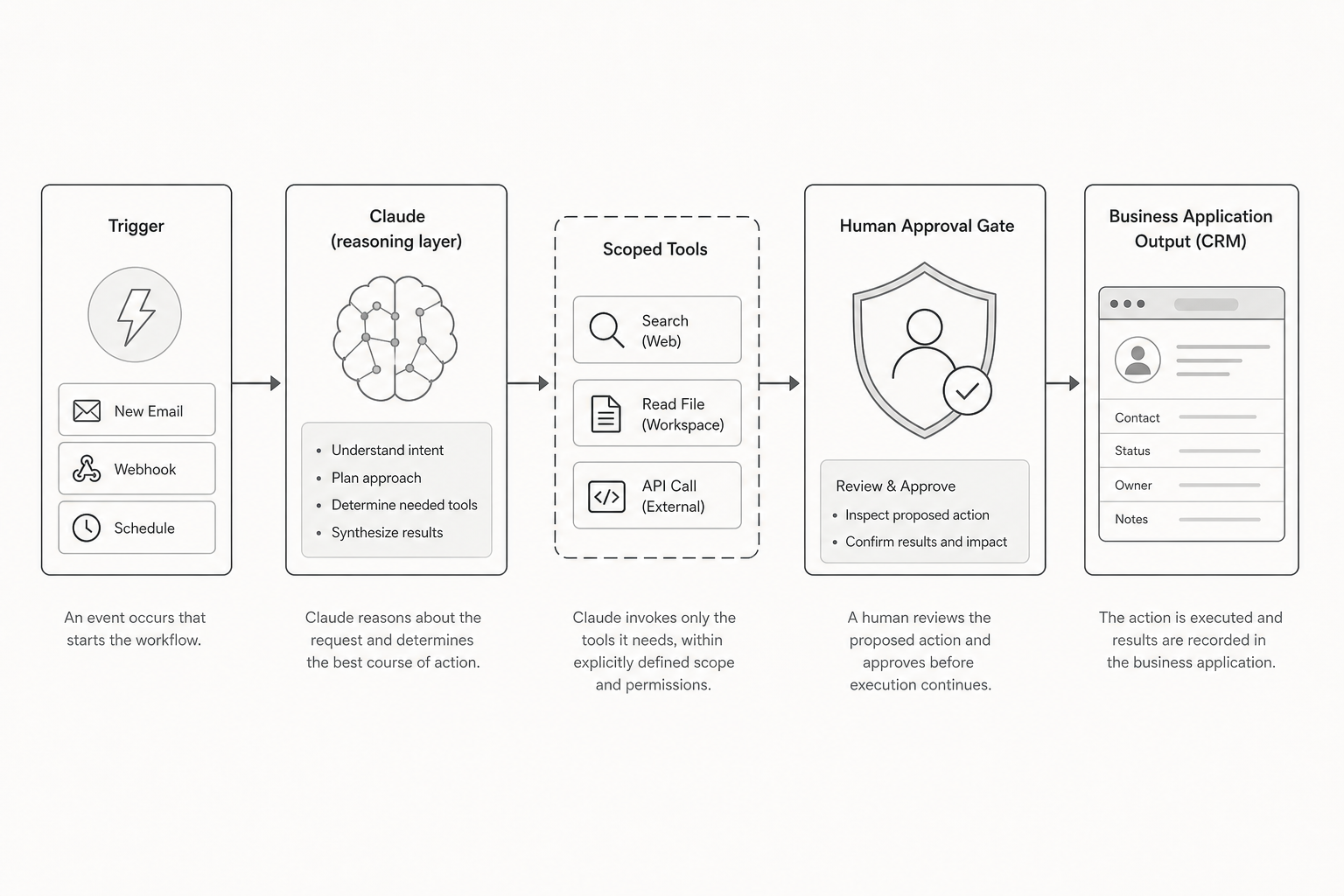
A step-by-step guide to building a governed agentic workflow with Claude — from workflow map to scoped tools, human gates, and production handoffs. Architecture before tools.
Relume AI helps teams wireframe and structure marketing sites fast. Here is how business owners and designers use it in 2026 sprints — what to generate, what to rebuild, and how to hand off to development without rework.
Supabase gives startup MVPs Postgres, auth, storage, and realtime in one platform — and pairs cleanly with Next.js 16. A workflow-first guide for founders who need to ship, not architect.
Adobe Firefly in 2026 spans Photoshop, Illustrator, and Express — but where does it belong in a business creative workflow? A practical guide for owners balancing speed, brand control, and commercial-safe AI generation.
Canva Magic Studio promises AI-powered design at scale for brand teams. Here is what works for business owners, where brand control breaks down, and how to use it without diluting your visual identity.
High-profile creators are building personal AI workflow tools like PewDiePie's Odysseus project. What that trend signals for operators — and why custom agent stacks are replacing generic chat.
Routing middleware intercepts requests before they reach your app — for auth, redirects, geolocation, and personalization. Learn the difference between Vercel platform middleware and Next.js 16 proxy patterns.
The Vercel AI Gateway routes requests to OpenAI, Anthropic, Google, and other providers through a single API — with failover, cost tracking, and no key sprawl. A business owner's guide.
Should your marketing site live in Framer in 2026? A business-owner guide to launch speed, CMS limits, developer handoff, and when Framer beats — or loses to — a coded Next.js site.
OpenClaw coordinates multiple AI agents in a single workflow. Learn what multi-agent systems are, when they help operators, and when they add complexity you do not need.
Fluid Compute is Vercel's unified execution model for serverless functions — full Node.js power, longer runtimes, and smarter billing. What business owners need to know before choosing a hosting stack.
Claude can do more than answer questions in a browser tab. Learn how operators use Claude for workflows, integrations, and governed automation — without treating chat as the product.
A practical look at Figma's AI features in 2026 — what design and product teams use daily, what they skip, and how business owners should evaluate AI inside your existing design workflow.
Hermes Agent is an open-source framework for building agentic AI systems. A practical breakdown for operators — what it does, where it fits, and when open-source agents beat closed platforms.
Cache Components and Partial Prerendering in Next.js 16 let you ship fast static pages with dynamic personalization — without rebuilding your entire site architecture.
Dark mode is not a color invert. Learn contrast, surface layering, and component patterns that keep business sites readable, accessible, and on-brand after sunset.
Version control is not just for code. Growing teams lose hours to Final_v2 files — learn why change history, ownership, and rollback matter for every workflow.
Spreadsheets work until they don't. Learn why growing teams outgrow shared sheets, where data fractures, and how to design a single source of truth today.
Visitors scan before they read. Learn how visual hierarchy guides attention to proof, offers, and calls to action on consulting and B2B service websites.
Most internal docs are write-once, read-never shelfware. Learn how workflow-first teams create documentation people open daily — without enterprise wiki bloat.
Designs that look finished in Figma often break in production. Learn the handoff practices, token systems, and workflow habits that close the gap between mockup and shipped site.
shadcn, MUI, and custom components each solve different problems. A practical decision framework for business sites that need speed, brand, and maintainability.
Technical debt is not just for engineers. For growing teams, workflow shortcuts compound into lost revenue, slow decisions, and staff burnout you can measure.
Before you sign a SaaS contract, use this workflow-first framework to evaluate software. Compare tools on fit, adoption, and total cost—not demo theater.
High-fidelity mockups feel productive but often hide structural problems. Learn why wireframing first saves time, aligns stakeholders, and produces better business websites.
Using AI sends data to third parties. Learn the privacy basics teams need — policies, permissions, and guardrails — before pasting client data into chatbots.
Why mobile-first design matters for business websites. Prioritize key workflows on small screens with practical rules for layout, speed, and conversion.
WCAG basics for business teams building websites and apps. Practical accessibility workflows, common failures, and inclusive design that protects trust.
An AI stack is the layers — data, models, tools, and workflows — that power AI in your business. A plain-language guide for owners and operators, not engineers.
Cloud or on-premises? A practical framework for SMB owners weighing cost, control, compliance, and AI readiness — without the enterprise jargon or vendor hype.
How color choices shape trust and clarity on B2B websites and dashboards. A workflow-first guide to palettes, contrast, and semantic color for business teams.
APIs connect your tools, data, and AI systems. Learn what business owners need to know about API design — no code required — to avoid integration mistakes.
How B2B teams use typography to build credibility. Learn font pairing, hierarchy, and readability rules that make your site feel professional — not generic.
A practical guide to design systems for business owners. Standardize UI workflows, reduce rework, and keep creative freedom without slowing your team down.
Most AI projects fail because teams buy tools before mapping workflows. Learn why process design comes first and how to fix broken automation before it scales.